


The Austrian ETF Tax Trap Nobody Talks About: Why Your Retirement Withdrawals Could Trigger a 27.5% Bomb
You’ve spent twenty years diligently building your ETF portfolio. Every month, like clockwork, you’ve sent money to your broker. Maybe you used Flatex (Austria’s steuereinfach broker) or DADAT. You’ve watched your Einstandspreis (cost basis) average out over time. Now retirement looms, and you’re ready to start Entsparen (withdrawing). Here’s where your tax-efficient dreams hit Austrian reality: that simple, single-ETF strategy you built might cost you thousands in unnecessary Kapitalertragsteuer (capital gains tax).
The problem? Austria’s gleitendes Durchschnittspreisverfahren (moving average cost method). Unlike Germany’s FIFO system that lets you sell your oldest (and usually cheapest) shares first, Austria forces you to use an average cost for all your holdings. When you bought your first FTSE All-World shares at €50 and your last ones at €120, the Finanzamt (Tax Office) sees every single share as having a blended cost of €85. Every withdrawal triggers a tax bomb on the gains.
The Multi-Vintage Strategy Austrian Investors Are Quietly Using
The solution making rounds among savvy Austrian investors is deceptively simple: stop feeding one ETF and start creating separate “vintages” or Tranchen (tranches). Instead of continuously investing in the same Vanguard FTSE All-World position for decades, you deliberately create new, separate positions every 5-7 years.
Here’s how it actually works: In 2025, you buy Vanguard FTSE All-World. In 2032, you start a fresh position in Invesco FTSE All-World (same index, different ISIN). In 2039, you add Xtrackers FTSE All-World. Three ETFs tracking the identical index, sitting as distinct positions in your depot.
Austrian Tax Reality Check: Why This Isn’t Just a German Import
The German Approach (FIFO)
Many Austrian investors first hear about this strategy from German finance blogs. However, Germany uses FIFO (First-In-First-Out), making this approach almost automatic by default.
The Austrian Constraint (Average Cost)
Austria’s average cost method means you must physically separate your positions for the strategy to work. The KESt system hits all capital gains at 27.5% after the €1,000 Sparerpauschbetrag allowance.
This is where the Tranchenstrategie becomes powerful. By creating separate positions, you effectively create multiple “tax buckets” with different cost bases. The Finanzamt can’t average what you’ve legally structured as separate investments.
Broker Workarounds: Multiple Depots vs. Multiple ETFs
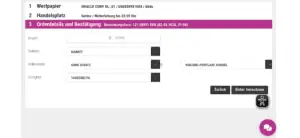
Austrian brokers like Flatex and DADAT allow multiple Unterdepots (sub-accounts) within one login. Flatex lets you create up to four additional depots “within seconds”, as one source notes. This gives you two implementation paths:
-
Path A: Same ETF, Different Depots
Buy Vanguard FTSE All-World in Depot #1 until 2030. Open Depot #2 and buy the same ETF again. The separate depot creates the separation you need. Clean, simple, but requires broker support. -
Path B: Different ETFs, Same Depot
Use different ETF providers tracking the same index. Vanguard FTSE All-World in your main depot, Invesco FTSE All-World for your second tranche, Xtrackers for your third. This works even with brokers that don’t offer sub-accounts.
The trade-off? Path B means more positions to track. As one Austrian investor warned: “If you have a 5-ETF model and switch every 5 years, you’ll have 40 ETFs over four decades.” Your portfolio starts looking like a steuerlicher Alptraum (tax nightmare) of its own.
The Math That Matters: A Real Austrian Example
Let’s run the numbers for an Austrian couple retiring with €500,000 in a single FTSE All-World position versus a three-tranche strategy.
Scenario: Single ETF
- Total investment: €200,000 over 25 years
- Current value: €500,000
- Average cost basis: €80 per share
- Need: €30,000 withdrawal
Taxable gain: €30,000 × (€500k – €200k)/€500k = €18,000
KESt due: €18,000 × 27.5% = €4,950
After-tax withdrawal: €25,050
Scenario: Three Tranches
- Tranche 1 (oldest): €100k → €300k (200% gain)
- Tranche 2 (medium): €60k → €150k (150% gain)
- Tranche 3 (newest): €40k → €50k (25% gain)
- Action: Withdraw from Tranche 3
Taxable gain: €30,000 × (€50k – €40k)/€50k = €6,000
KESt due: €6,000 × 27.5% = €1,650
After-tax withdrawal: €28,350
You’ve just saved €3,300 in taxes on one withdrawal. Repeat this annually for 20 years of retirement, and the compound effect is staggering.
The Hidden Trap: When Simplicity Becomes Expensive
This strategy isn’t without critics. Austrian tax law changes. The Finanzamt could theoretically challenge the “economic substance” of holding identical indices through different wrappers. So far, though, the approach holds because each ETF is a legally distinct financial instrument with its own ISIN, costs, and tracking differences.
The bigger risk? You. Managing 10+ positions across multiple depots requires discipline. You need to track which tranche to withdraw from, monitor the relative performance, and resist the temptation to rebalance across tranches (which would trigger tax events).
“Unübersichtlicher wird es halt. Manche haben ein 2,3,5 ETF-Modell. Wenn du ein 5-ETF Modell hast und alle 5 Jahre wechselst, dann hast du über 4 Jahrzehnte 40 ETFs in deinem Depot.”
– One Austrian Broker
Starting Today: Your Action Plan
You don’t need to overhaul your portfolio overnight. The beauty of this strategy is that you implement it now, during your accumulation phase.
If you’re in your 30s or 40s
Continue your existing ETF, but open a second depot this year and start fresh contributions there. In 5-7 years, add a third. You’re building tax options for future you.
If you’re in your 50s
Move more aggressively. Split new contributions immediately between two depots or ETFs. Your time horizon is shorter, so you need the tax separation to mature faster.
If you’re already retired
This strategy still works for partial conversions. You can’t rewrite history, but you can strategically sell your highest-basis positions first and rebuild in a more tax-efficient structure for future withdrawals.
The Bottom Line
Austrian tax law punishes simplicity. The single-ETF, set-and-forget approach that works beautifully in Germany or the US becomes a tax trap here. The Tranchenstrategie adds complexity, yes, but it’s complexity with a purpose: giving you control over when you trigger the 27.5% KESt.
The question isn’t whether this strategy works, it demonstrably does. The question is whether you’re willing to trade 30 minutes of administrative overhead per year for potentially tens of thousands in tax savings. For most Austrian investors building wealth over decades, that’s not a difficult calculation.
Your future retired self, sipping coffee in a Graz café or hiking in Tyrol, will thank you for the extra effort today. The Finanzamt, on the other hand, will wonder why your tax bills are so much lower than your neighbors’. And that’s exactly the point.